
Use more of your solar
Daytime surplus and evening consumption reviewed to give the battery a practical role.
Home battery storage
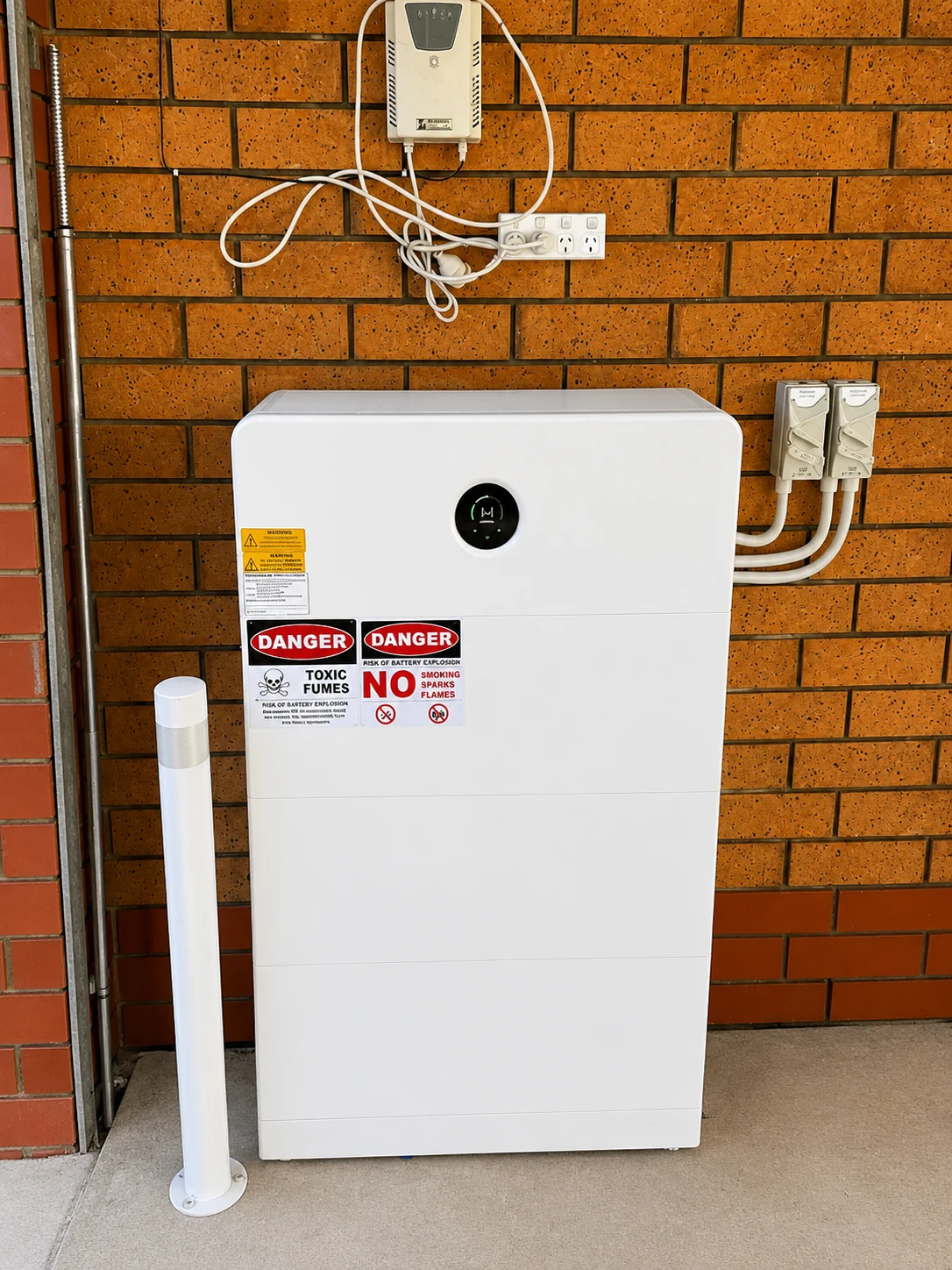
Battery value depends on how much excess solar you have, when the home uses power and what you want protected during an outage. Laurence reviews those details before discussing size or equipment.
SA contractor licence · BLD335702
Local, owner-operated
Direct with Laurence
Licence BLD335702
Care for your home
The right design begins with the energy your solar leaves unused, the power your home needs after sunset and the circuits you would want during an outage. Laurence assesses those details before discussing capacity or equipment.
A useful first conversation
These details help Laurence understand the job, ask the right questions and plan the most useful next step.
How Borda can help
Daytime surplus and evening consumption reviewed to give the battery a practical role.
Usable storage and output considered together so you understand how long energy may last and what can run at once.
Essential-circuit or broader backup expectations agreed before the electrical design is finalised.
Solar compatibility, switchboard, phases, likely EV loads and possible expansion assessed as one system.
Safety first
Stored energy and inverter output are different. Agree which circuits matter and what can run together before the system is designed.
→Tell Laurence what you want storage to achieve, what solar is already installed and which circuits matter most during an outage.
Useful to know
Clear practical information, supported by trusted Australian guidance where useful.
Capacity in kilowatt-hours describes how much energy can be stored. Output in kilowatts limits how many and how large appliances can run at once. A bigger capacity number does not automatically mean stronger backup.
Australian Government · Batteries ↗A battery must be specifically configured for outage operation. Depending on the design, it may support selected essential circuits, broader household loads within limits, or only one phase of a three-phase home.
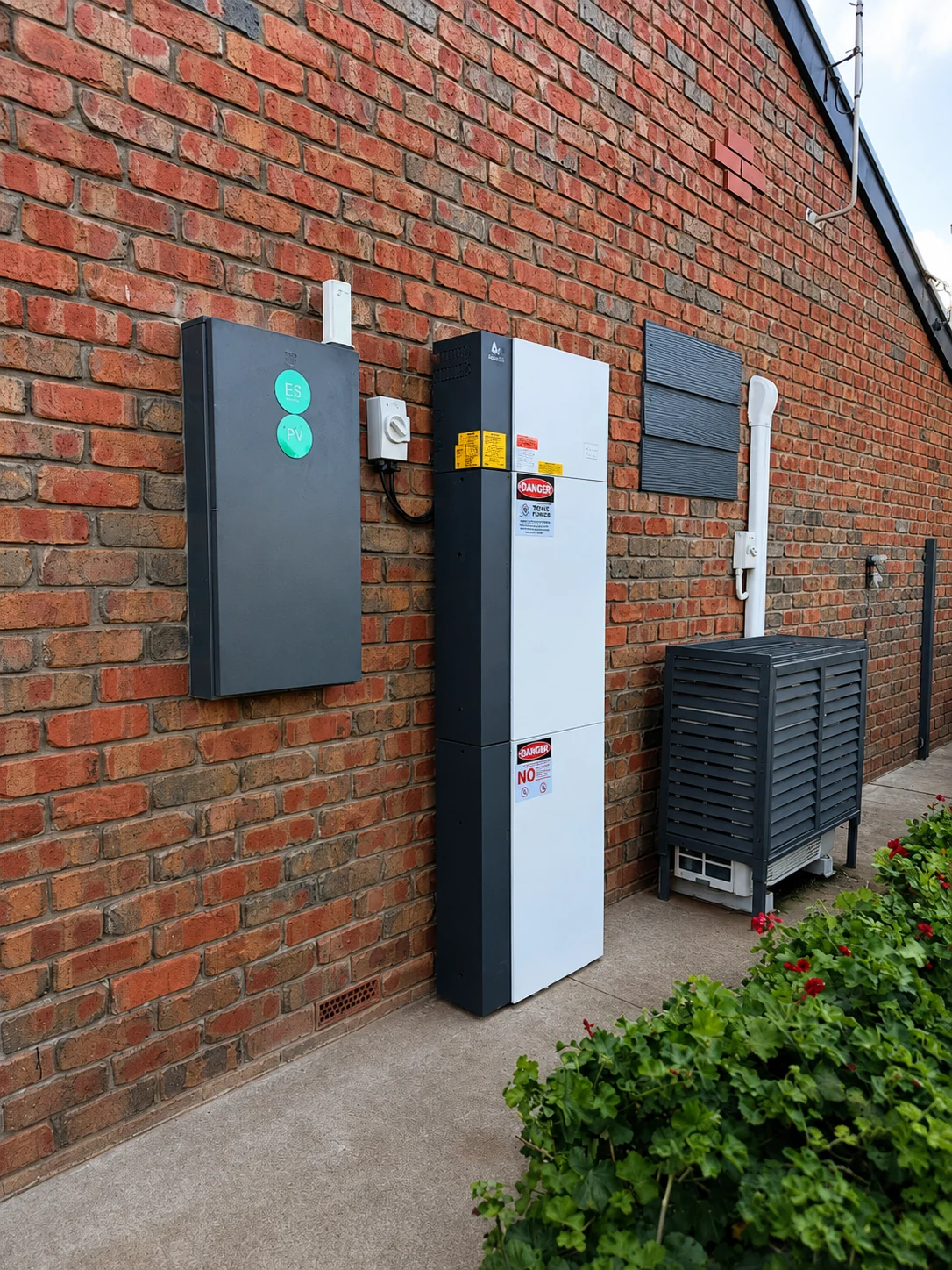
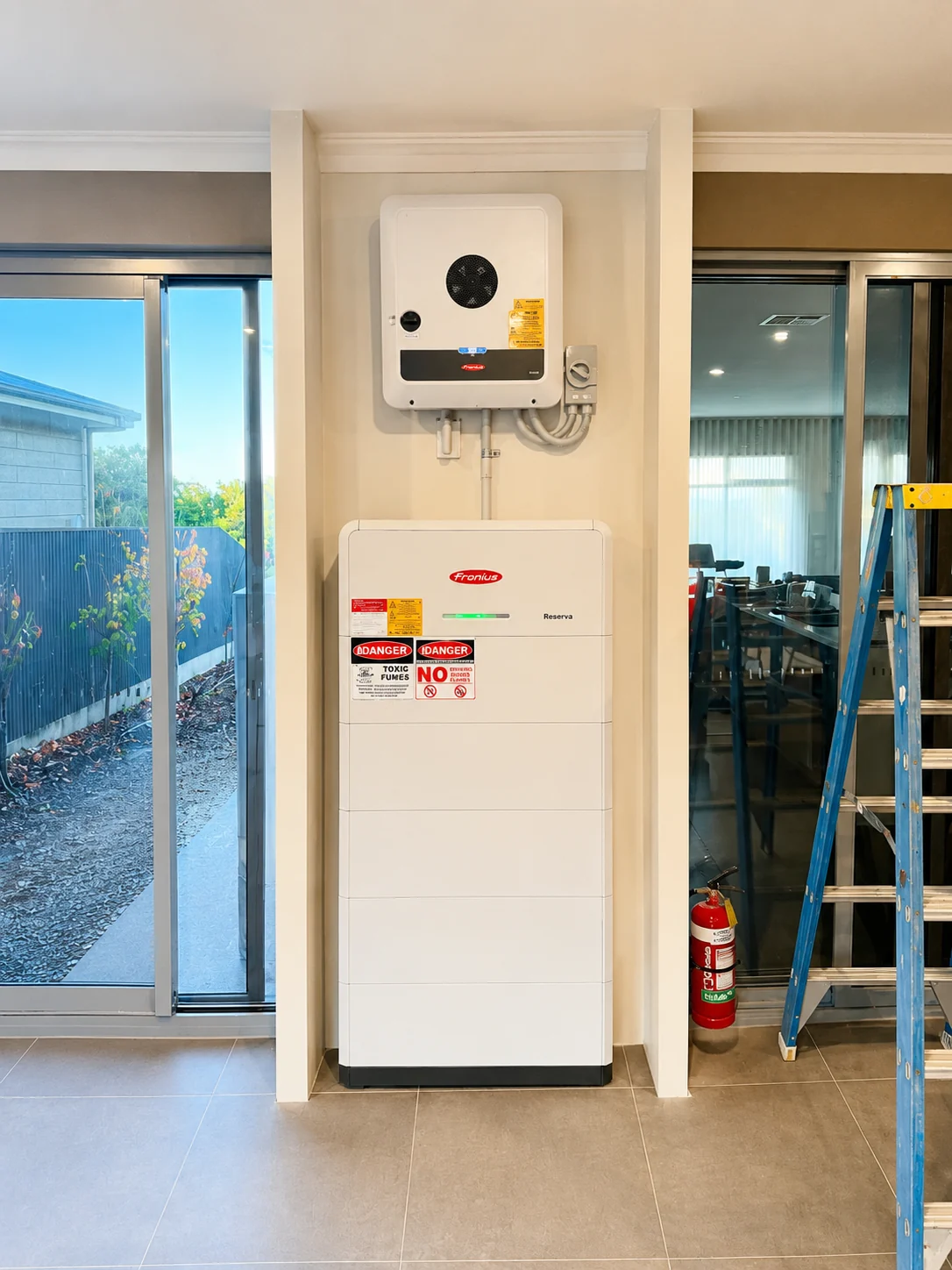
Australian Government · Batteries ↗Safe clearances, wall construction, summer sun, weather, cable access and vehicle impact all influence the installation location. Future modules also need suitable space from the start.
SA Metropolitan Fire Service ↗The Cheaper Home Batteries Program supports eligible systems, but the value depends on installation date and usable capacity. Rules changed from 1 May 2026, so Laurence confirms current eligibility rather than quoting a blanket percentage.
Australian Government · Cheaper Home Batteries ↗Direct with your electrician
Speak directly with Laurence about what matters during an outage and how the home uses energy after sunset. He checks the existing solar, inverter and switchboard, then explains the capacity, output and backup arrangement that best fit those priorities.
Compare battery pathways
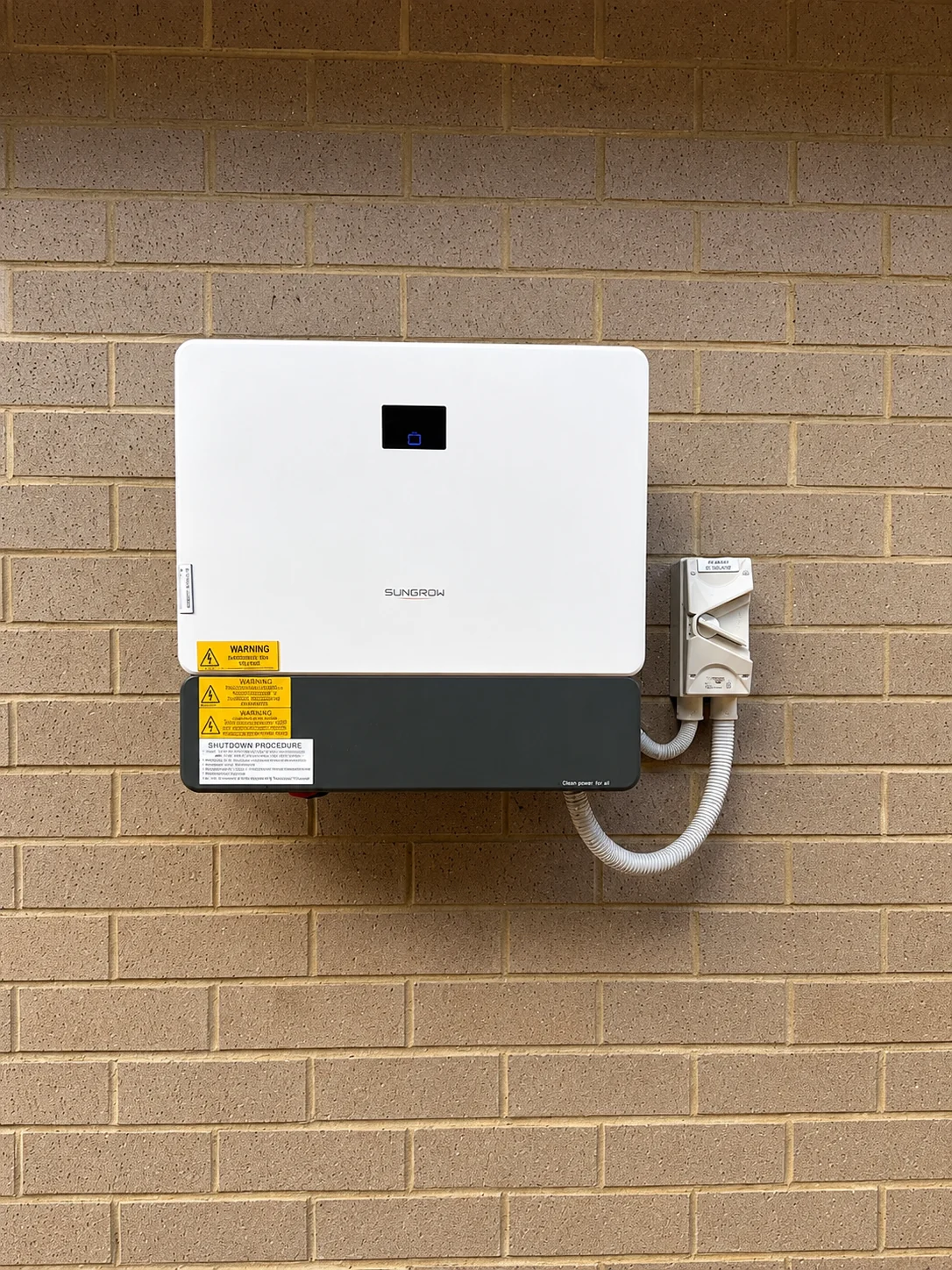
Explore two modular battery platforms, then talk with Laurence about which configuration—if either—fits your existing solar, energy use and backup priorities.
Share what is happening, where you are and what a good result looks like.
Laurence assesses the property, explains the options and confirms a clear scope.
The agreed work is tested, left tidy and handed over with practical guidance.
Common questions
Helpful starting points. The right answer still depends on the property and the existing electrical setup.
Often, yes, but the inverter, system configuration, switchboard, phases and current product approvals still need checking. Laurence assesses the existing equipment before recommending the practical pathway.
Only if the system is designed to do so, and always within its output and stored-energy limits. Many homes choose selected essential circuits; others require a broader design.
Some islandable systems can keep using solar and recharge the battery while the grid is down. Others can use only the energy already stored. This must be established during design.
There is no universal size. Useful sizing considers daytime solar surplus, evening use, simultaneous appliance loads, backup priorities, tariff and future consumption.
Possibly, if the product, final configuration, installation space and approval conditions allow it. Expansion should be discussed at the beginning rather than assumed.
Not necessarily. Value depends on available solar surplus, when you use power, tariffs, feed-in rates, system cost and operating settings. Laurence will avoid generic savings claims.
The right answer depends on the property and what is already installed.
A practical next step
Tell Laurence what you want storage to achieve, what solar is already installed and which circuits matter most during an outage.